


Acidifying Seas Threaten Underwater Archaeological Heritage
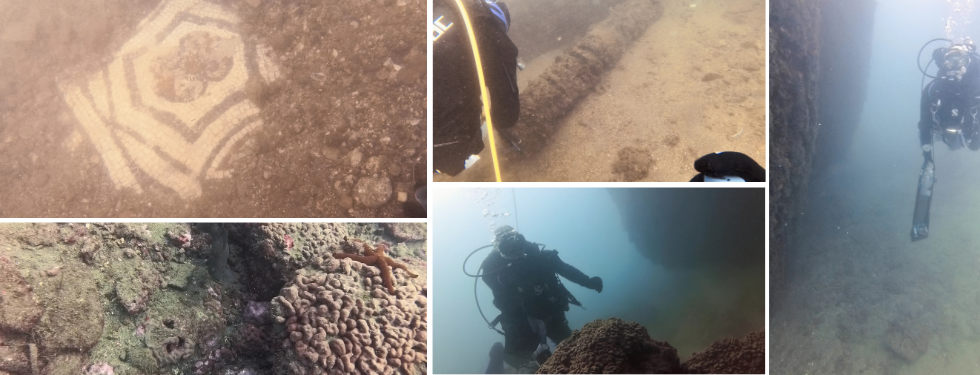
Beneath the seabed lies an “invisible” heritage that includes archaeological treasures of enormous value, such as the mosaics of the Submerged Archaeological Park of Baia in the Campi Flegrei area, as well as shipwrecks, statues, and ancient harbor structures. These precious traces of human history are now at risk of irreversible damage due to the effects of climate change, which is intensifying ocean acidification and impacting submerged materials in ways similar to those observed for corals and calcifying organisms.
A study conducted by the Department of Geosciences at the University of Padua, recently published in Communications Earth & Environment (Nature Portfolio), presents the first systematic risk assessment of underwater cultural heritage sites in relation to climate change. The research shows that increasing greenhouse gas emissions could drastically raise the vulnerability of submerged cultural assets.
Oceans and seas absorb large quantities of CO₂ emitted by human activities. Since the pre-industrial era, ocean acidity has increased by approximately 30% and could triple by the end of this century. The effects on marine ecosystems are well documented: biodiversity loss, impacts on fisheries and aquaculture, and increasing stress on corals, coralline algae, and other calcifying organisms.
Until now, however, the impact of climate change on underwater cultural heritage had not been systematically assessed. To fill this gap, the study’s authors conducted both laboratory and field research, including diving campaigns in the waters around Ischia. The site was chosen because, due to the volcanic nature of its subsoil, it hosts special underwater vents from which carbon dioxide (CO₂) naturally escapes at ambient temperature — the same gas responsible for ocean acidification. The rising bubbles create localized areas where seawater is naturally more acidic, providing a unique “window into the future” of our oceans.
In this open-air natural laboratory, the team submerged samples of different stone materials at various points within the CO₂ emission area. This allowed researchers exposing them to a broad range of seawater pH values and, consequently, to different levels of acidification.
Field experiments were complemented by periodic laboratory analyses conducted on the acidified materials in order to assess deterioration over the course of one year. The experimental data were further integrated with historical and future climate models.
The results show that under high-emission scenarios, artifacts made of calcium carbonate — such as marble and limestone — will become much more vulnerable to degradation due to ocean acidification. Artistic details and inscriptions on submerged statues and epigraphs are at risk of being lost, irreversibly erasing a portion of our cultural history.
According to the authors, integrating underwater cultural heritage into climate risk assessment frameworks is now essential. Without mitigation and adaptation measures, a substantial part of the historical memory preserved on the seafloor could be irreparably compromised.
The research was led by Luigi Germinario within the framework of the European project “Wateriskult. Climate change risk to underwater cultural heritage in stone” funded by the European Commission through the Marie Skłodowska-Curie Actions.
In addition to the Department of Geosciences at the University of Padua, the study involved the Department of Biology of the same university, the Stazione Zoologica Anton Dohrn, and the Universidad de Alicante, in dialogue with the Regno di Nettuno Marine Protected Area and the Archaeological Park of the Campi Flegrei.
Press information:
PAPER: “Climate change and ocean acidification pose a risk to underwater cultural heritage” published in Communications Earth & Environment
AUTHORS: Luigi Germinario, Marco Munari, Isabella Moro, David Benavente, Francesco Terlizzi, Claudio Mazzoli
DOI: https://doi.org/10.1038/s43247-026-03184-w